FOR IMMEDIATE RELEASE
Contact: uschs@uschs.org
U.S. Capitol Historical Society Announces that Speaker Johnson will Display George Washington’s Gavel During State of the Union Address
USCHS Worked with Speaker’s Office and Freemasons Potomac Lodge No. 5 to Enable Display of Gavel From 1793 Capitol Cornerstone Ceremony
Speaker Johnson to Display Historic Gavel on Rostrum as Nod to America’s 250th Anniversary
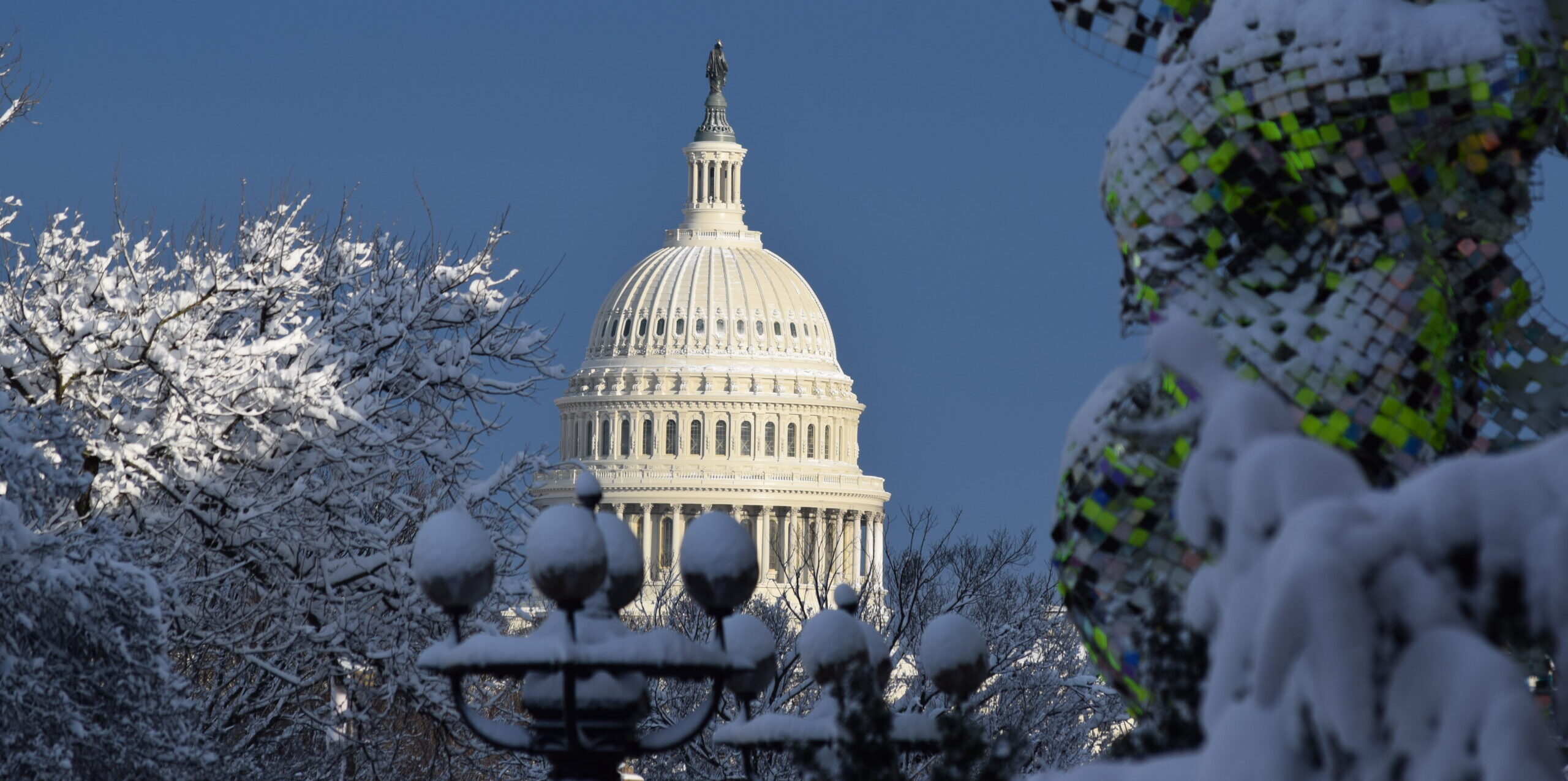
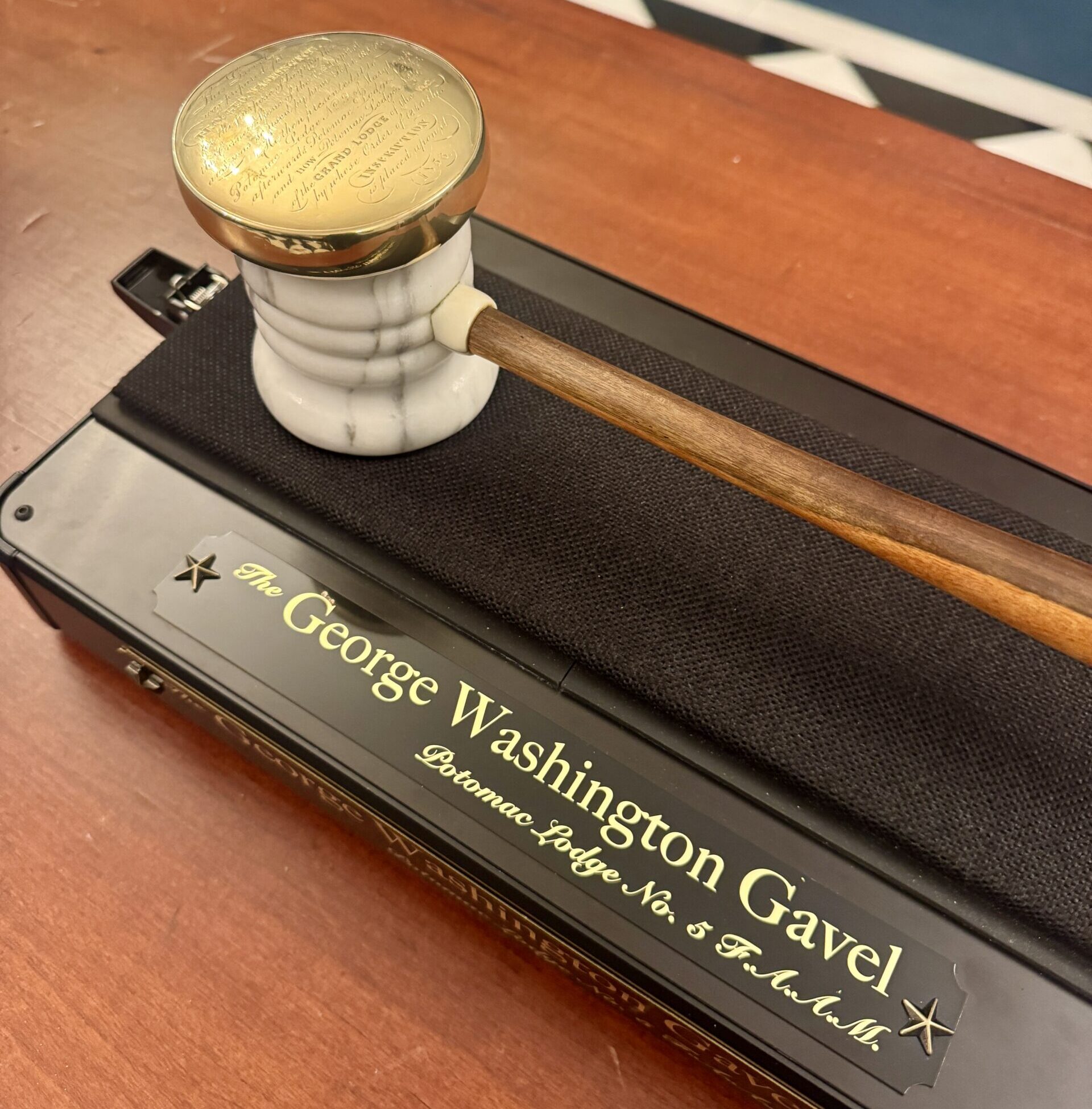
WASHINGTON, D.C. – Today, the U.S. Capitol Historical Society proudly announced that Speaker Mike Johnson will become the first House Speaker in history to display George Washington’s Gavel during the State of the Union Address to Congress. The historic Gavel was first used in 1793 to lay the cornerstone of the United States Capitol building: “The People’s House” and the physical manifestation of our democracy. Since that ceremony, the Gavel has been in the care of Potomac Lodge No. 5, the oldest Masonic Lodge in Washington, D.C. The U.S. Capitol Historical Society worked diligently with the Lodge and Speaker’s Office to enable the Gavel to rest on the rostrum during this year’s Address—marking the 250th anniversary of America’s founding.
“The U.S. Capitol Historical Society would like to thank Speaker Johnson and Potomac Lodge No. 5 for working with us to ensure the display of a historic treasure for this year’s historic Address,” said Roswell Encina, President & CEO of the U.S. Capitol Historical Society. “Complementing the State of the Union with George Washington’s Gavel beautifully reflects the importance of preserving and sharing the Capitol’s history; helping Americans connect with the people, places, and traditions that continue to shape our nation. A significant part of the Society’s mission is to bring Congress to the People. During America250, it is especially satisfying to have helped bring the People to Congress.”
In 1793, U.S. President and Master Mason, George Washington, laid the cornerstone of the United States Capitol Building. At the time, a growing schism between “Federalists” and “Republicans” threatened the American experiment in its infancy. Washington therefore lent his prestige to such events as the laying of the Capitol cornerstone to give credence to the new U.S. Government: established in 1789 after our Constitution was ratified.
On the morning of September 18, 1793, Washington and a procession of artillery and Masonic lodges crossed the Potomac River to the new Federal City. They did so, a newspaper reported, “with music playing, drums beating, colors flying, and spectators rejoicing.” At the Capitol site, Washington stepped into a dug trench, laid a silver plate onto the ground, and set the cornerstone atop it. He was accompanied by brethren who conducted a Masonic ritual with corn (a symbol of nourishment), wine (a symbol of refreshment), and oil (a symbol of joy). Witnesses then chanted and celebrated until night.
After the ceremony, Washington bestowed the Gavel to Valentine Reintzel, the head of Potomac Lodge No. 5, who assisted that day and cared for the artifact until his death. In the two centuries since, Potomac Lodge No. 5 has been the Gavel’s custodian, loaning it to other cornerstone ceremonies, including the Washington Monument, National Cathedral, and Smithsonian Institution.
The work of the U.S. Capitol Historical Society to organize and ensure the Gavel’s display Tuesday night is part of its ongoing efforts to celebrate America’s 250th anniversary and reflect on its history, the precedents of our Forefathers, and the lessons they still teach us today.
The Society was founded in 1962 by Congressman Fred Schwengel. He believed that “The millions of people, adult and youth, who come” to the Capitol “need somehow to be helped while they are here to catch something of the fire that burned in the hearts of those who walked and talked in these halls—Jefferson, Adams, Clay, Webster, Lincoln…” Doing so, Schwengel believed, “will be good for America.” To this end, the Society was chartered by Congress in 1978 to help foster and increase an “informed patriotism.”
As Washington himself told Congress in his first State of the Union Address:
“Knowledge is in every Country the surest basis of public happiness…To the security of a free Constitution it contributes in various ways: By convincing those, who are entrusted with the public administration, that every valuable end of Government is best answered by the enlightened confidence of the people: And by teaching the people themselves…to discriminate the spirit of liberty from that of licentiousness, cherishing the first, avoiding the last, and uniting a speedy, but temperate vigilence against encroachments, with an inviolable respect to the laws.”
The U.S. Capitol Historical Society is a nonpartisan, nonprofit, tax-exempt, educational 501(c)3 organization. Societal activities include educational tours, scholarly symposia, enhancement, and preservation of the Capitol’s collection of art and artifacts, sponsorship of research on the public careers of those who have served in the Capitol, and assistance to Congressional and other Capitol offices. To learn more about the Society, please visit CapitolHistory.org.