by Roswell Encina, President & CEO, U.S. Capitol Historical Society
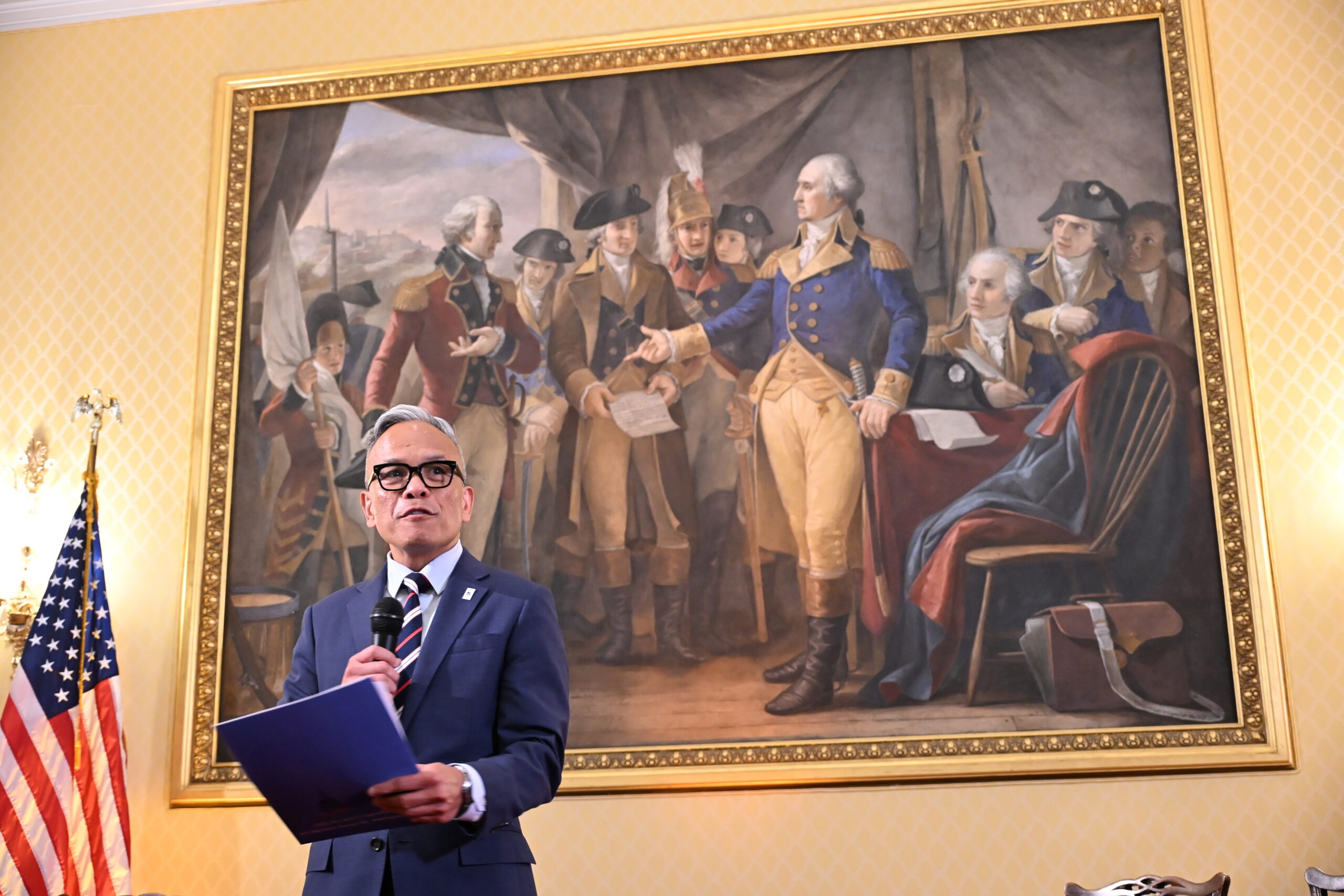
Photo (c) Bruce Guthrie
This Fourth of July, Americans across the country will gather to celebrate Independence Day and the beginning of our nation’s Semiquincentennial, the 250th anniversary of the Declaration of Independence.
There will be fireworks, parades, concerts, family gatherings, and countless opportunities to reflect on our nation’s remarkable journey.
We should celebrate.
But America 250 is about much more than looking back. It is about deciding what we choose to carry forward.
As President and CEO of the U.S. Capitol Historical Society, I spend my days thinking about history, not simply as something preserved behind museum glass, but as something living, evolving, and continually being written. Every generation inherits the American story, but every generation also has a responsibility to add to it.
Too often we think of history as dates to memorize or monuments to visit. History is neither. History is conversation. It is disagreement. It is aspiration. It is compromise. It is the ongoing effort to build a more perfect Union.
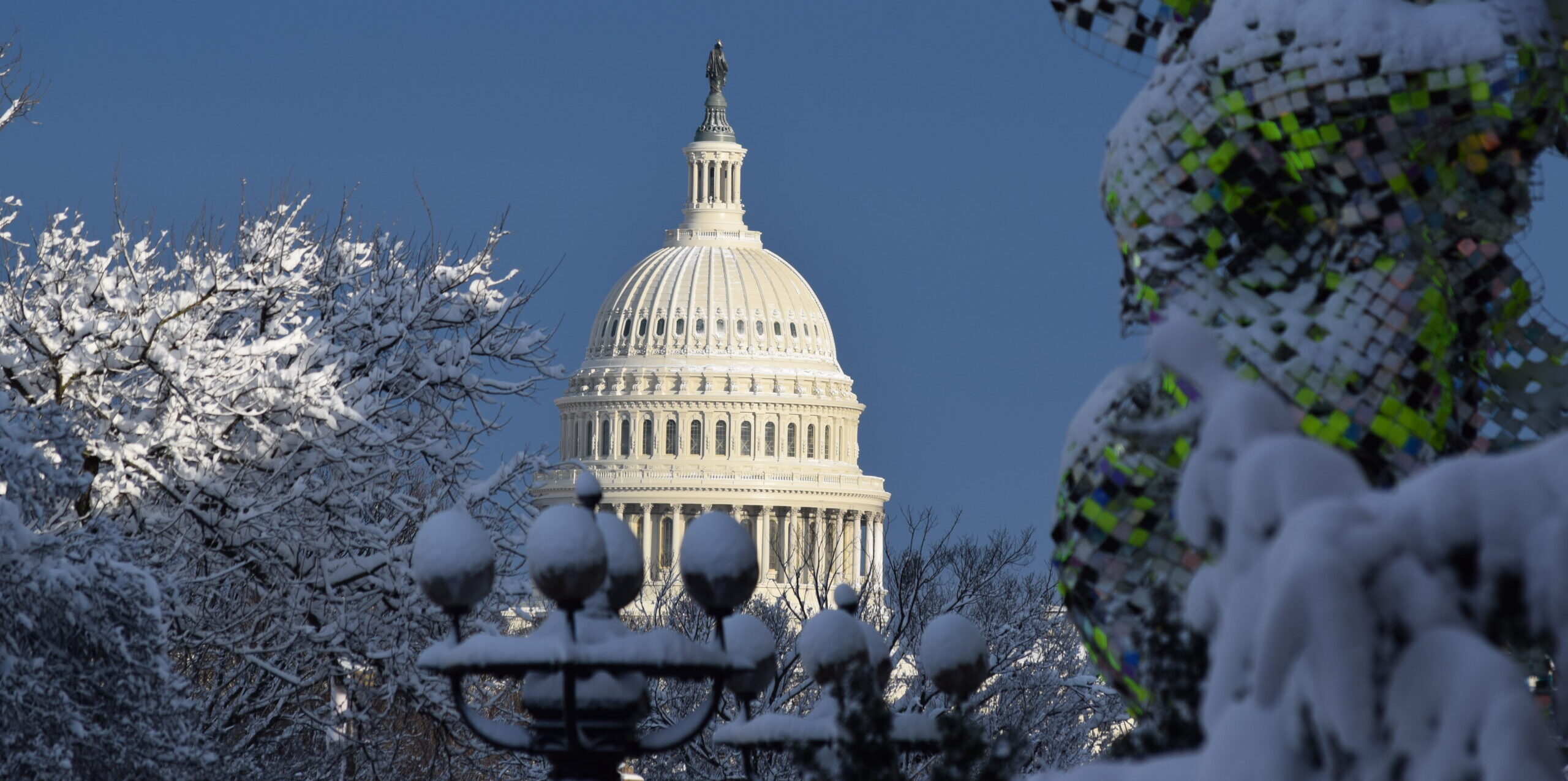
There may be no better place to see that story unfold than the United States Capitol. The Capitol is often described as the seat of Congress, but it is also something much larger. It is where our national ideals are debated, tested, challenged, and renewed. It has witnessed moments of extraordinary courage and heartbreaking failure. Within its walls, Congress approved the Thirteenth Amendment abolishing slavery, passed landmark civil rights legislation, including the Voting Rights Act, declared war, celebrated peace, welcomed new states, and enacted legislation that transformed the lives of millions of Americans.
The Capitol tells the story of our triumphs. But it also reminds us of our shortcomings. And to celebrate America honestly is to embrace both.
Our history includes extraordinary innovation, opportunity, and democratic resilience. It also includes slavery, racism, exclusion, violence, and division. Those chapters are not contradictions to our story. They are part of it. Understanding both allows us to appreciate not only how far we have come, but also how much work remains.
History, after all, is one of our greatest teachers. That is why civics education matters.
Across the country, too many young people are growing up without a basic understanding of how their government works or why our institutions matter. Civic knowledge should never be viewed as partisan. It is foundational. Democracy depends upon citizens who understand not only their rights, but also their responsibilities.
At the U.S. Capitol Historical Society, we believe preserving history and elevating civics go hand in hand. Every student who walks through the Capitol, every teacher who participates in one of our institutes, every author who shares a new perspective, and every visitor who leaves with a deeper understanding of Congress becomes part of that larger American story.
That is why America’s 250th anniversary is such an important milestone.
It is an invitation. An invitation to read more deeply. To listen more carefully. To ask difficult questions. To appreciate the generations that came before us while preparing the next generation to lead. Most importantly, it is an opportunity to remind every American that this story belongs to all of us.
At the heart of the Declaration of Independence are words that have challenged and inspired Americans for nearly 250 years:
“We hold these truths to be self evident, that all men are created equal, that they are endowed by their Creator with certain unalienable Rights, that among these are Life, Liberty and the pursuit of Happiness.”
For nearly 250 years, Americans have debated, challenged, and worked to fulfill the promise of those extraordinary words. Each generation has been called to expand the meaning of equality, liberty, and opportunity, bringing the nation closer to its founding ideals. That work continues today, and it should. Democracy has never been finished. It has always depended upon each generation renewing its promise.
Our story did not end in 1776. Nor did it end with the Constitution, the Civil War, the Civil Rights Movement, or any single chapter in our history. Our story is still being written.
As we celebrate America’s Semiquincentennial, let us do more than commemorate the past. Let us recommit ourselves to understanding it. Let us preserve the history that shaped us, elevate the civics that sustains us, and inspire the next generation to write the chapters still to come.
Because the better we understand our shared history, the better prepared we are to shape our shared future.
That, perhaps, is the greatest way we can honor the first 250 years and begin the next.